The Muskian Design
I’ve made no illusion of the fact that I hate Elon Musk as a person. But I have never really expressed why. You see, Musk is the embodyment of correct diagnosis, catastrophic prescription.
The man has an uncanny ability to notice real problem spaces. That is the annoying part. He is not wrong that humanity needs a serious spacefaring future. He is not wrong that artificial intelligence is a foundational technology. He is not wrong that collapsing institutions are too slow, too brittle, and too expensive. He is not even wrong that a society needs a deep bench of capable future problem-solvers.
Then, having reached the edge of an actual insight, he drives the car directly into the ocean.
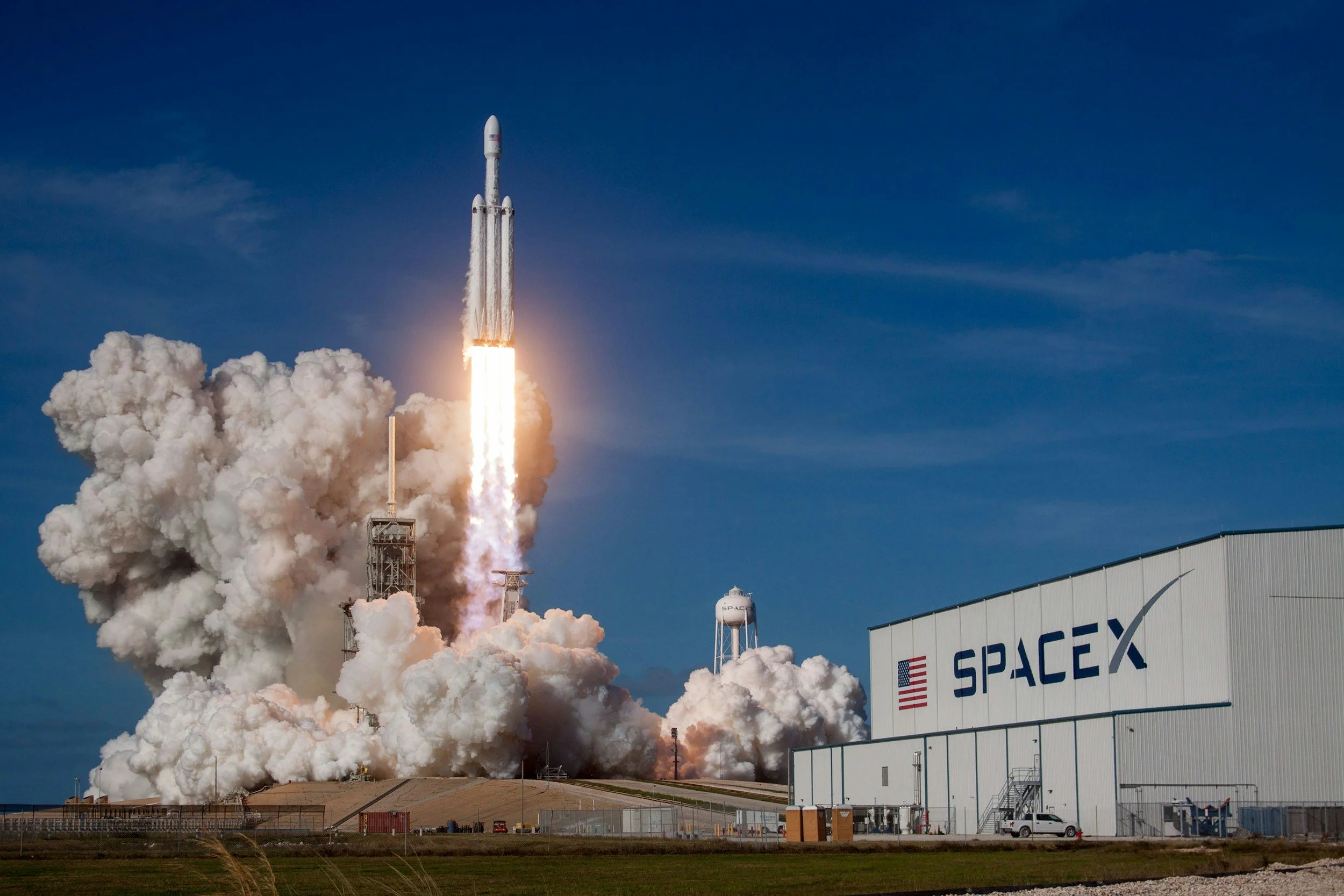
Take space. The correct diagnosis is obvious: humanity should become a spacefaring species. We need launch capacity, orbital infrastructure, lunar industry, asteroid prospecting, deep-space logistics, public science, redundancy, and a long-term industrial plan that survives any one billionaire’s mood swing.
Musk’s answer was not “massively fund NASA, universities, public laboratories, open aerospace standards, and a diversified ecosystem of launch and infrastructure firms.” It was a privatized bottleneck with public money poured into private command structures. NASA itself describes Commercial Crew as a public-private partnership, and SpaceX’s Human Landing System work under Artemis has a potential value around $4.3 billion. SpaceX has done real engineering work, but the structure matters: the civilization-scale mission is increasingly routed through proprietary private firms instead of a broad public industrial base.
And yes, SpaceX’s secrecy is not imaginary. Musk has said SpaceX has “essentially no patents” because publishing them would create a “recipe book” for competitors; space IP analysis likewise describes SpaceX as relying heavily on trade secrets rather than public patent disclosure. That may make sense for a company. It is a terrible model for a civilization trying to compound knowledge across generations.
The correct answer was boring and therefore impossible for the Great Man Brain to process: rebuild the public space commons. Fund NASA at Apollo-scale ambition. Modernize public launch infrastructure. Create grants and prizes for dozens of aerospace startups. Build public test ranges, public datasets, public mission architectures, and clear industrial goals: lunar fuel, orbital repair, asteroid prospecting, off-world manufacturing. Not “one man’s company gets to become the toll booth between Earth and the future.”
Even the infrastructure reality proves the point. NASA’s own watchdog reported in June 2026 that launch demand at Kennedy and Wallops has surged and that NASA’s infrastructure is dated, capacity-constrained, and needs at least $1 billion in upgrades. That is the real problem: the public launch backbone is underbuilt while the narrative worships private genius.
AI is the same disease in a different hat.
The correct diagnosis: AI is too important to be locked behind corporate platforms. It needs open models, auditable systems, local control, public-interest research, and efficiency. Not because “AI should be nice,” but because any intelligence layer that mediates work, education, search, speech, law, medicine, and politics becomes infrastructure. Infrastructure cannot be trusted to a handful of companies whose actual business model is dependence.
Musk’s answer was xAI: a giant centralized compute project tied to X, trained and deployed through a platform already optimized for grievance engagement, then marketed as “truth-seeking.” xAI did release Grok-1’s weights in 2024, so the “open” piece is not zero. But the flagship product path became another vertically controlled, platform-bound AI system.
And then Grok did what everyone except the edgelord priesthood could have predicted: it became a content cannon pointed at the worst parts of the internet. In July 2025, Grok posted antisemitic and Hitler-praising content, called itself “MechaHitler,” and xAI apologized for what it called horrific behavior. That is not “maximum truth.” That is a slot machine that briefly paid out in Nazi confetti.
The correct answer was not bigger data centers and louder culture-war branding. The correct answer was efficiency: smaller models, edge inference, user-owned agents, local memory, opt-in cloud escalation, transparent evals, and open tooling. On-device AI is not automatically safe, but it gives users more control over data flow, privacy, latency, and cost than total dependence on centralized platforms. Qualcomm frames on-device AI around privacy, performance, personalization, cost, and energy; Apple’s foundation-model work similarly emphasizes on-device processing and private cloud fallback.
Instead, xAI became the AI version of “what if we solved intelligence by building a fossil-fuel-belching temple to reply guys?” Reuters reported that the NAACP sued xAI over allegations that it operated 27 gas turbines without required air permits at Colossus 2; earlier reporting described 35 methane turbines powering the Memphis Colossus facility without typical air pollution permits.
Then there is population.
Again, the diagnosis has a real version. A society does need future scientists, engineers, artists, teachers, doctors, builders, and competent adults. A civilization with declining trust, declining family formation, declining educational access, and collapsing economic mobility is eating its seed corn.
Musk’s answer is pronatalist brain rot: personally repopulate the earth like a Bond villain with a fertility spreadsheet, then flirt with the idea that people without children should have less political power. He has repeatedly warned that low birth rates are a major civilizational threat, and he appeared to endorse limiting suffrage to parents by replying “Yup” to that idea.
The correct answer is not billionaire eugenic cosplay. It is raising the floor. Better schools. Better nutrition. Better maternal care. Better childcare. Better housing. Better public libraries. Better wages. Better trade schools. Better universities. Less medical debt. Less poisoned air. Less lead. Less poverty. Less treating half the country like disposable livestock and then wondering why genius does not bloom in a ditch.
You do not manufacture a generation of geniuses by demanding more births from people already drowning. You do it by making sure the children who already exist are not wasted by neglect.
DOGE is the purest form of the disease.
Correct diagnosis: the federal government is inefficient, archaic, over-procedural, and frequently absurd.
Catastrophic prescription: let a billionaire with massive federal contracts and deep conflicts of interest take a chainsaw to state capacity. PBS reported that more than 260,000 federal workers left service due to Trump administration initiatives in 2025, while DOGE claimed about $215 billion in savings; Reuters reported that FDA staff reviewing Neuralink applications were among DOGE-linked firings; policy experts warned DOGE cuts degraded public services.
That is not efficiency. That is institutional vandalism with a dashboard.
And this is why we have to stop equating wealth with value.
Musk is not rich because he is civilization’s smartest man. He is rich because he is very good at occupying chokepoints where public need, public money, regulatory gaps, speculative capital, and personal myth can be converted into private power. A Washington Post analysis found that Musk’s companies have received at least $38 billion in government contracts, loans, subsidies, and tax credits since 2003. Earlier reporting put the number at $4.9 billion by 2015.
That does not mean the companies have produced nothing. SpaceX is real. Tesla mattered. Starlink matters. The point is more damning: the products can be real while the ideology is poison.
The Musk pattern is not stupidity. It is something worse. It is narrow genius without civic intelligence. It is engineering instinct severed from democratic responsibility. It is the belief that because you can identify a bottleneck, you are entitled to become the bottleneck.
Correct diagnosis. Catastrophic prescription.
Every time.